- 31(0)6 51641546
- info@equinestudies.nl
- Aalsdijk 18, Asch

What if your horse could train its own muscles during the hours you’re not working with him? Not only would he become stronger and healthier, but you’d also see benefits in your training and performance. How nice would that be?
Passive Physio® makes it possible! This online course is for anyone who would like to delve deeper into physically and mentally supporting their horse during the other 23 hours of the day that we are not actively training them.
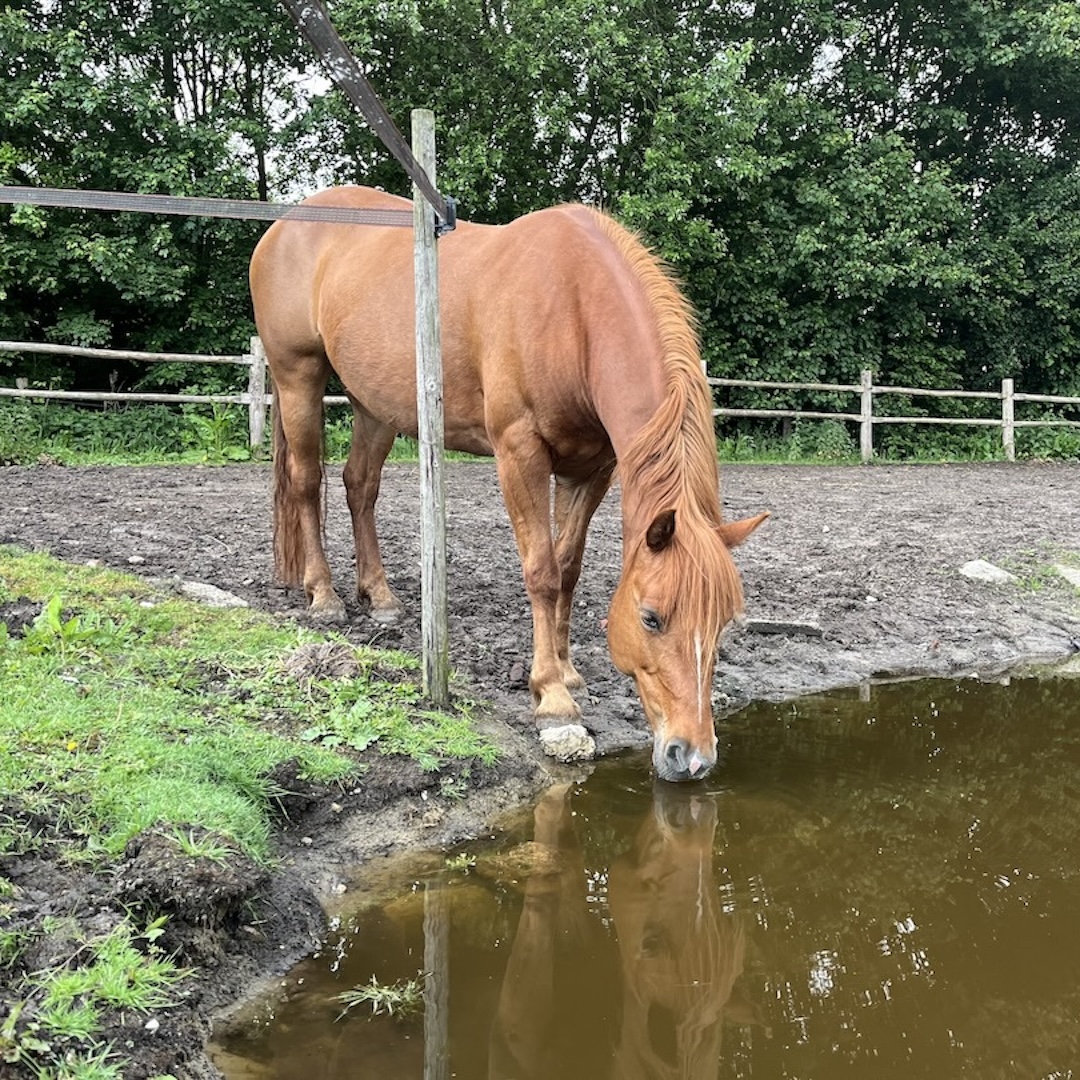
Whether you have horses at home, stabled at a boarding stable or ride at a riding school… there is always a way to apply Physio®.
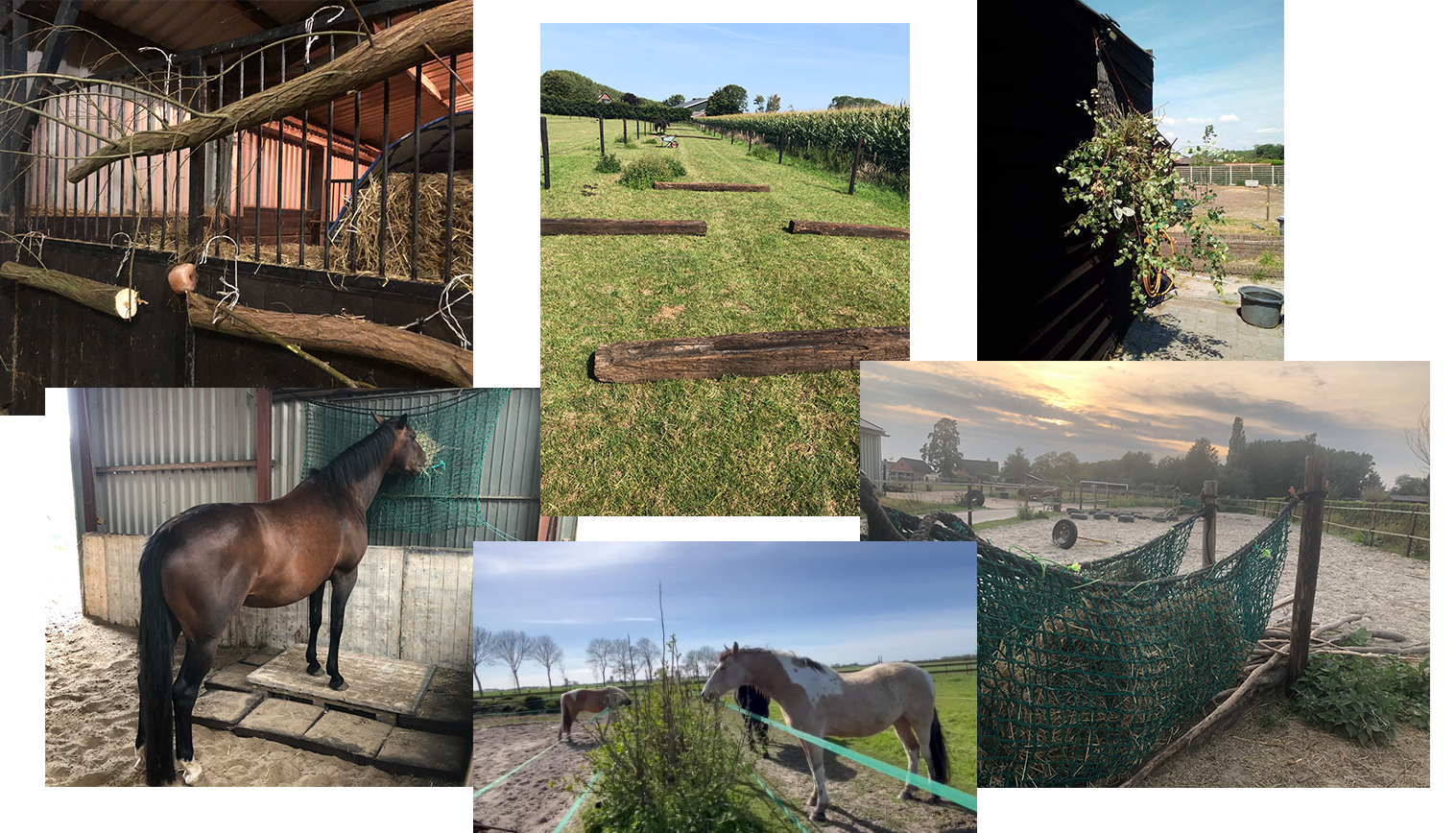
In the course, we’ll walk you through over 70 practical examples of how you can adapt your horse’s living environment. You’ll see various examples with visuals, and we’ll also explain how to build up the exercises and introduce them to your horse in small steps.
By adjusting your horse’s environment, the horse trains itself during the day. The constant repetition of the exercises ensures that actual changes take place in its muscular system, precisely at the moments when you are not actively training the horse.
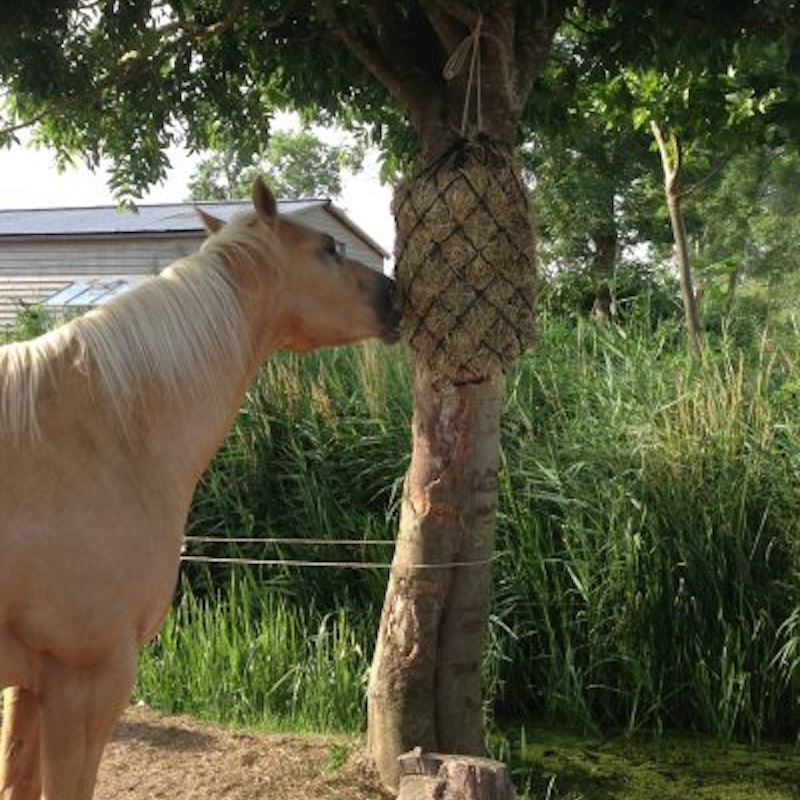
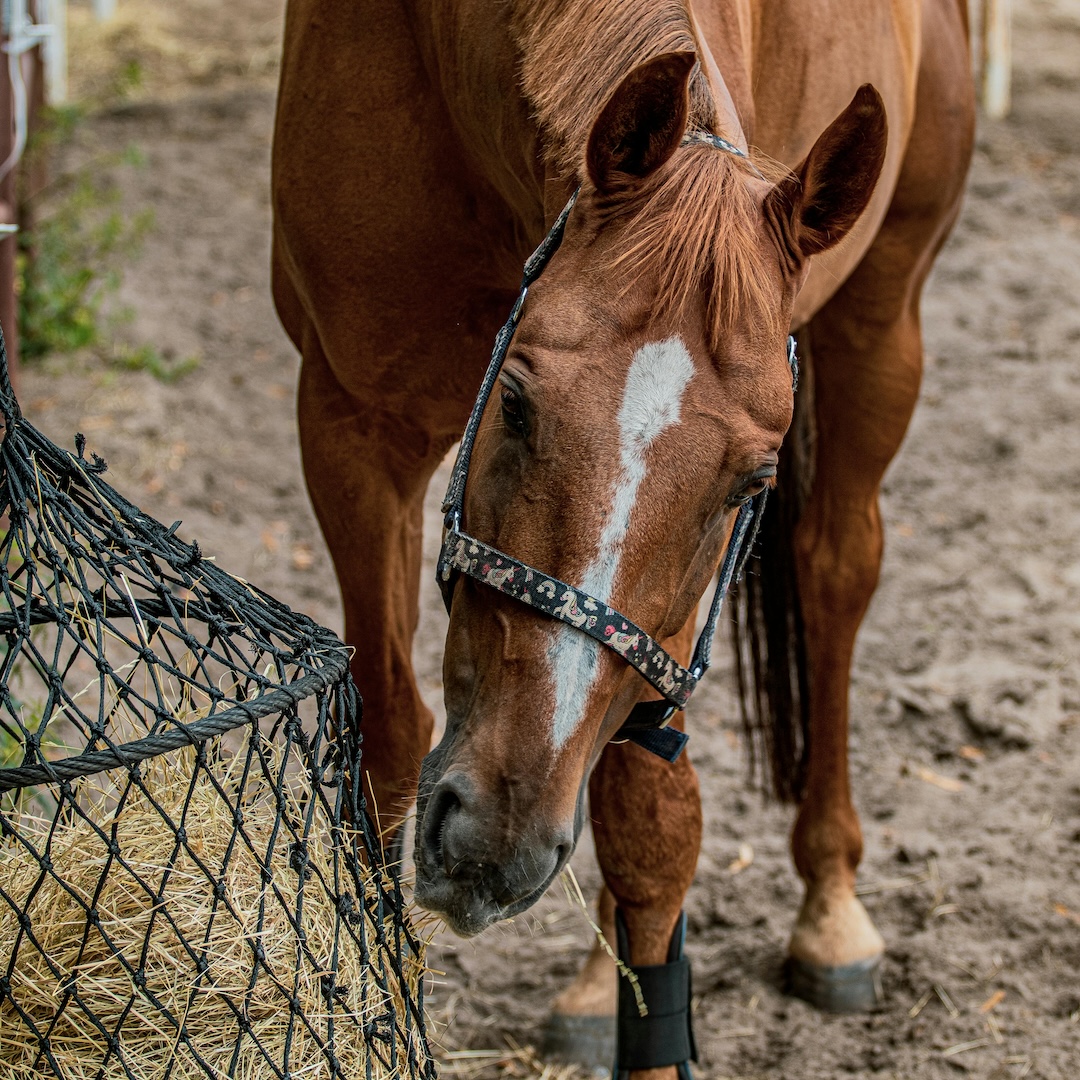
When horses eat roughage at different heights, they have to stretch, tug, and pull to reach the food. Feeding at varying heights therefore helps develop core muscles. With roughage, hay nets, and other equipment, you can offer the horse variety and build strength. This is a key principle of Passive Physio®.
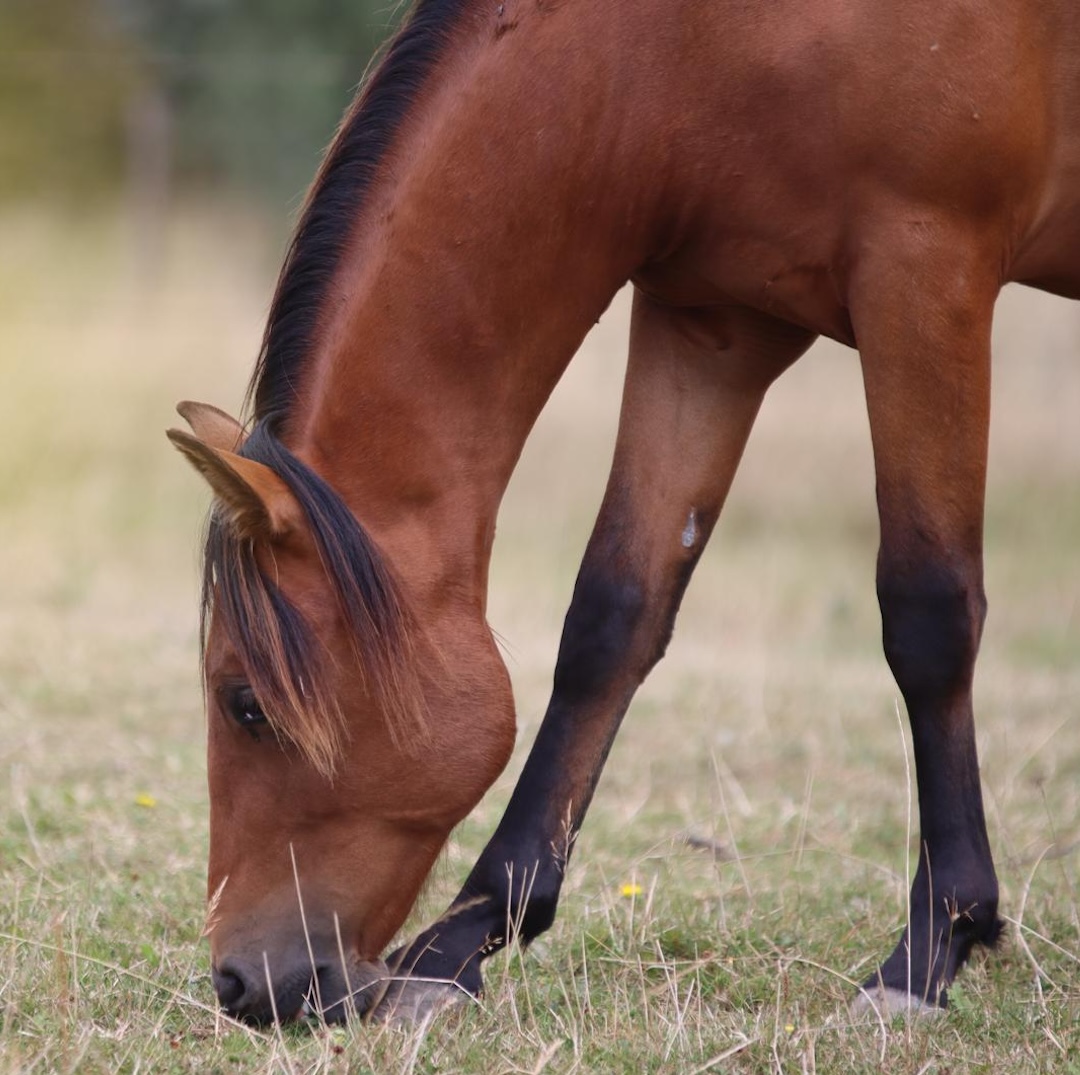
Look at a herd of wild horses and you’ll see movement. On average, a wild horse travels between 5 and 15 kilometers per day. It’s no wonder a horse’s body is completely geared towards movement. It needs it to stay healthy and fit. This principle is essential for Passive Physio®, but how do you integrate it into your current management?
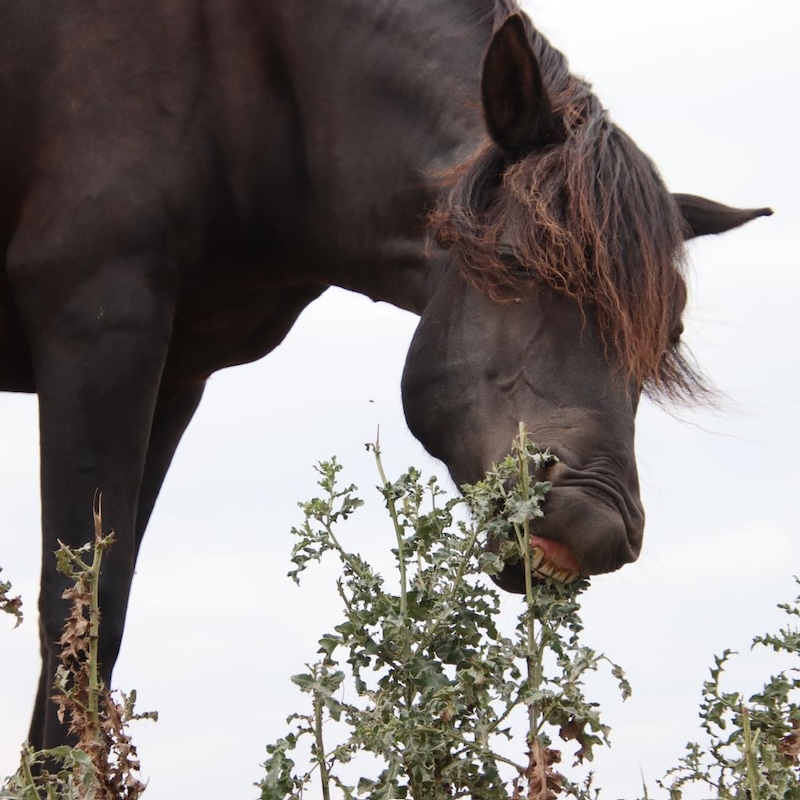
When a horse grabs food above knee height, this is called browsing. The horse uses different muscle groups for this activity than when grazing. Browsing is a natural behavior for horses; they don’t have to learn it. With Passive Physio®, you give them some of this need back, making them physically and mentally fitter.
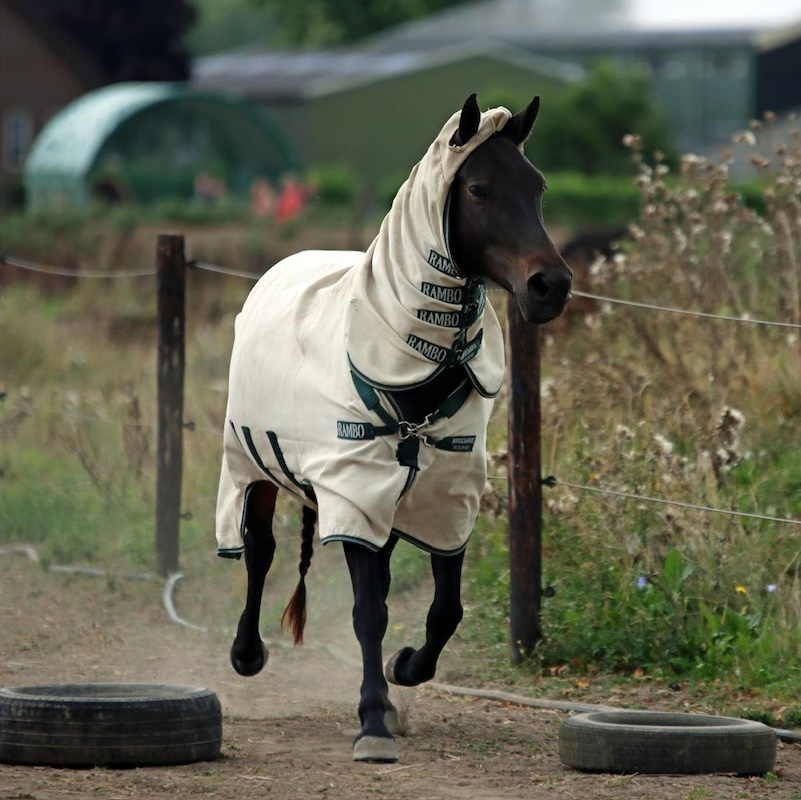
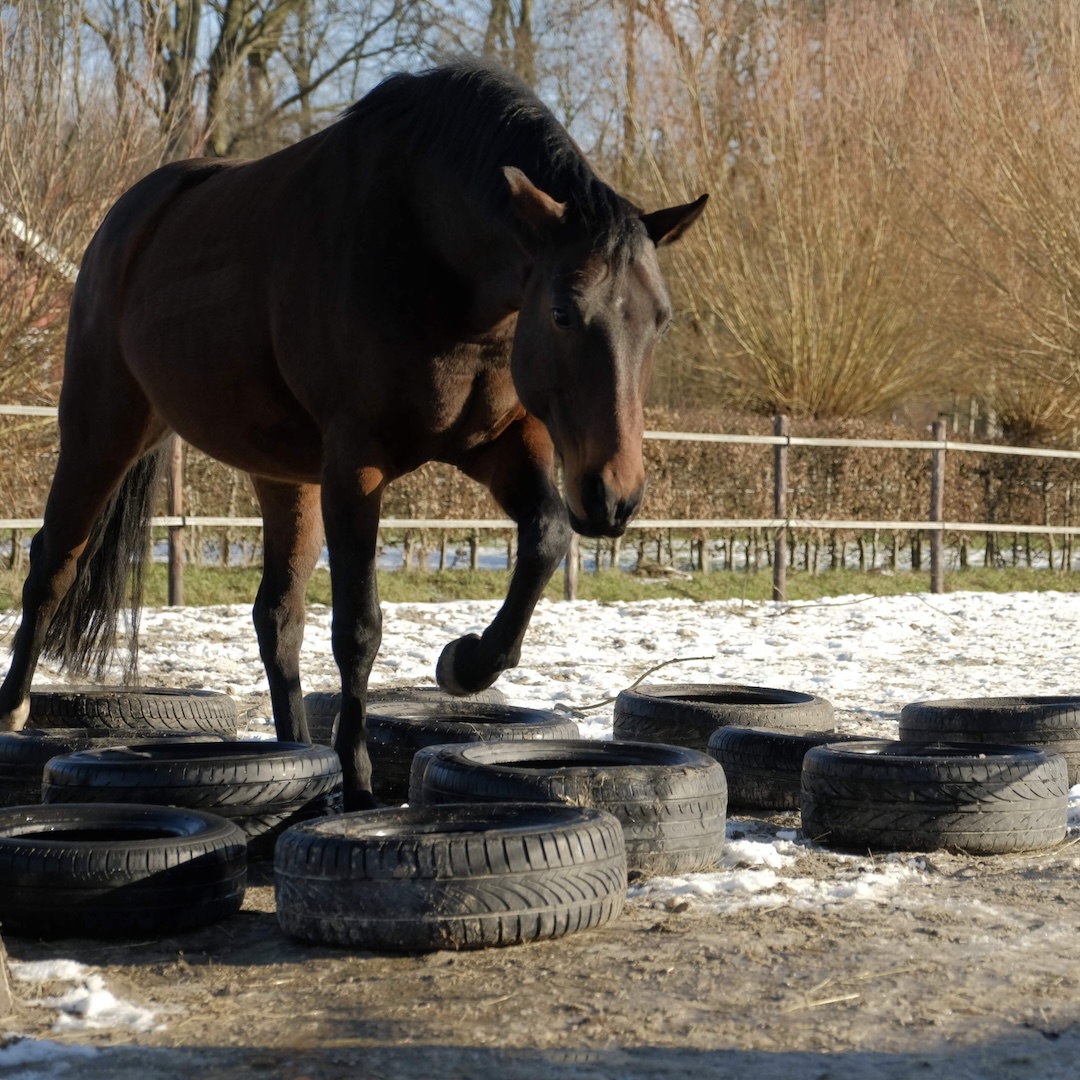
When you consider a horse’s natural habitat, they need to know their bodies well to navigate streams, steep slopes, and natural obstacles. Different surfaces significantly influence the horse’s physical development. You can still offer them this.
Our traditional training methods are primarily aimed at training the horse's larger muscle groups in their reaction and strength, thus enabling the horse to jump over obstacles, gallop or perform gymnastic (dressage) movements.
The deeper muscles, the so-called cybernetic muscles, can be weaker and less developed even in highly trained horses. These muscles, a complex system responsible for balance, elasticity, and self-carriage, can be trained by offering Passive Physio®.
Its development is just as important for good movement as the larger muscle groups on the outside.
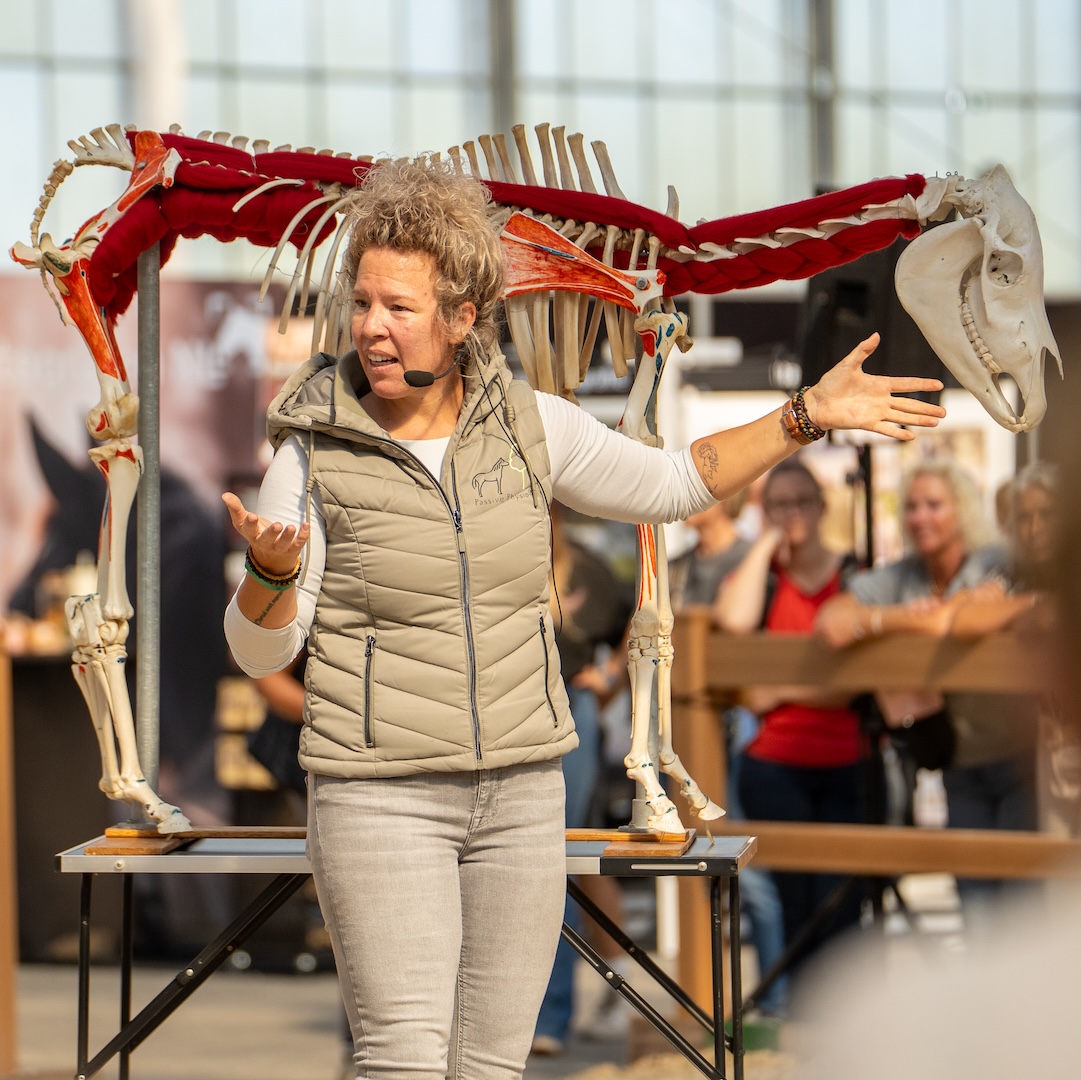
Tamara has years of experience with Passive Physio®. All videos are narrated by her, giving you the opportunity to learn directly from her during the course. What does she focus on and what stands out to her? A unique opportunity!
In the course, we’ve collected videos of over 70 different ways to use Passive Physio®. Regardless of where the horse is and how much influence you have on its environment, this course will give you ideas for using Passive Physio® with your horse!
The course is filled with real-world case studies. You’ll see the impact Passive Physio® can have. Just imagine the effect on the balance muscles, the horse’s posture, the condition of the hooves, and of course, the horse’s mental health.
The importance of Passive Physio® arose from the findings of Australian scientist Dr. Sharon May Davis and concerns the effect of variable feeding positions.
If you take this knowledge further, it essentially comes down to stable management: changing your horse’s environment in a way that allows him to train certain muscles almost effortlessly—muscles that are important for his self-carriage and good posture.
How can you set up the horse’s environment in such a way that you challenge the horse physically and mentally to stay healthier? By looking at how the horse has developed in history and with the knowledge about how the current horse is put together, we know more and more about what the horse needs to stay physically and mentally strong!
Tamara Dorresteijn is fully dedicated to Passive Physio®, a concept she has established nationally and internationally since 2017. Using her expertise, she focuses on improving the physical and mental well-being of horses through environment-based management and preventative insights.
Since joining Equinestudies in 2016, Tamara has developed a deep understanding of equine anatomy and biomechanics through participation in numerous dissections.
Zefanja Vermeulen was closely involved in Dr. Sharon May-Davis’s research on the Nuchal Ligament Lamellae. This marked her entry into the fascinating world of primitive horses and equines. They discovered that primitives possess unique anatomical structures, findings that have since been the subject of several scientific articles.
With these unique insights, Zefanja laid the foundation for the Passive Physio® concept. Tamara then developed this concept into a comprehensive and in-depth program.
√ Use of hay nets (at different heights)
√ Passive Physio® with branches and herbs
√ Tips for using shrubs and trees
√ Use of (DIY) attributes to stimulate feeding postures
√ Use of feeding stations to encourage movement
√ Adding obstacles
√ Inspiration & introducing different surfaces
√ Add enrichment such as chafing areas, water and hills
Reviews
Ik heb al diverse cursussen gevolgd, maar de diepgang van Passive Physio is uniek. De cursus legt de wetenschappelijke basis haarscherp uit, waardoor je niet zomaar oefeningen doet, maar écht begrijpt waarom je ze doet. Zeer professioneel en compleet!
"The Passive Physio course immediately transformed my stable management. It's so logical: you don't do exercises with your horse, but you make smart adjustments to the environment so he trains his own muscles. Within a week, I noticed my horse was moving more actively and smoothly. This is pure, practical knowledge that you can immediately apply to improve your horse's well-being."
And that’s exactly how it is! As horse owners, riders, and trainers, we generally spend a lot of time optimizing the horse’s training, even though that only represents a tiny percentage of a horse’s daily routine. Passive Physio® is about management. We discuss how to design the horse’s environment to keep it mentally and physically fit, and how to strengthen the (core) postural muscles in this way, without “training.”